


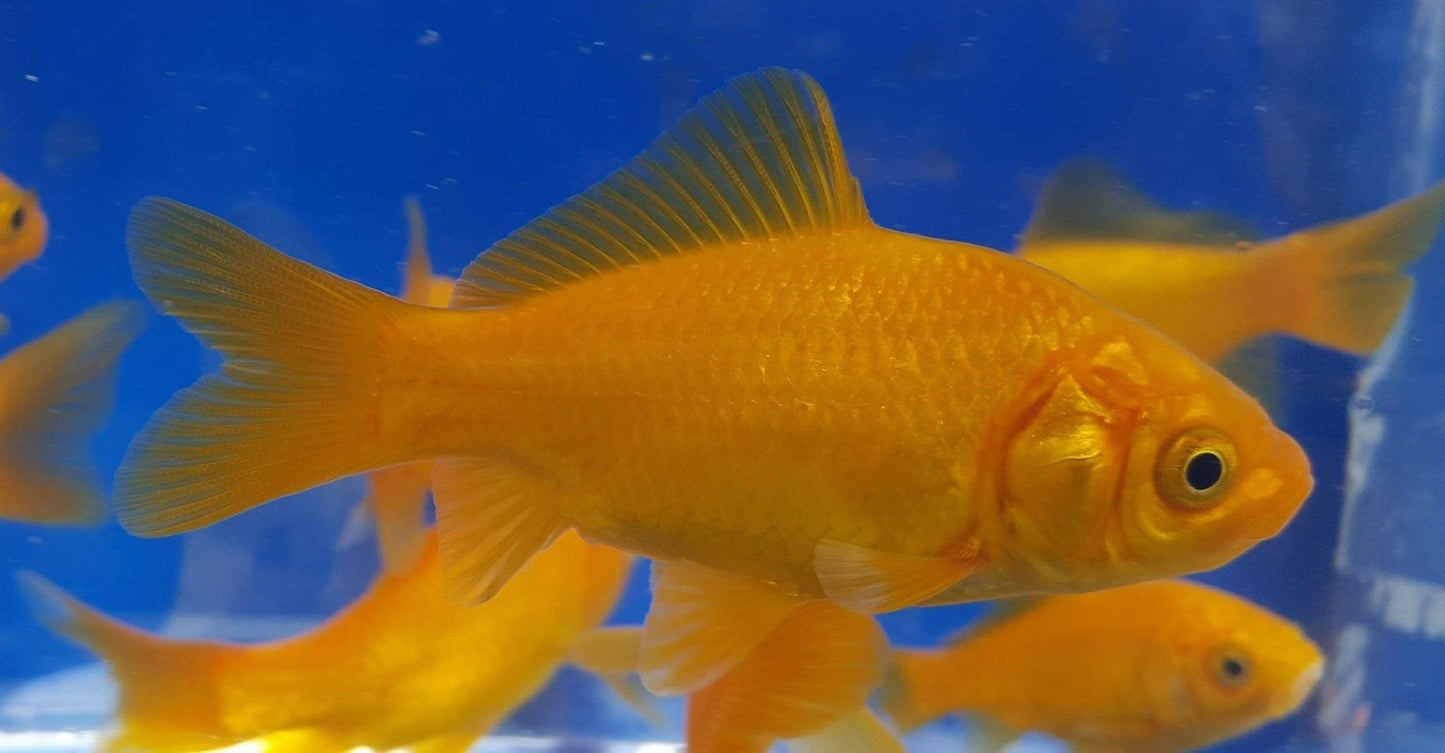
Canary Goldfish 2-3 Inch
Couldn't load pickup availability
Care
Given the long history of goldfish keeping, it's perhaps a surprise that yellow fish weren't widely kept until recently but they're certainly here to stay. Originally appearing as stocky, short-finned standard goldfish, further breeding has produced long finned and yellow & white forms. It's a colour that previously was more familiar in koi but it's apparent that these bright yellow fish compliment other forms such as sarasa comets and shubunkins beautifully. Goldfish should be kept in groups but these can consist of a mixture of varieties - just make sure that female fish aren't outnumbered by the more long-finned and lightly-built males, which chase them relentlessly during spawning.
Like all hardy goldfish breeds, these are a great choice for the garden pond. Hardy and long-lived, they'll happily live amongst pond plants and don't place too much of a burden on filtration, even as mature fish. Not only do their colours complement other varieties but they"™ll freely interbreed, with fry showing the typical goldfish dark colouration that protects them from predators until they grow large enough to look after themselves.
In their long history as pets, it's become common practice to keep goldfish indoors in containers that are much too small for them. As you can imagine, housing a 30cm pond fish in a bowl is not ideal and a suitable indoor aquarium should be at least 100 litres in capacity and well-filtered for young specimens. Far better alternatives are available for indoor keeping and tropical fish are far easier and a good deal less work. If your heart is set on goldfish as a pet, consider starting with small fish in a large aquarium which can then be upgraded to a spacious pond as they grow "“ obviously, this is only an option with pond-hardy varieties.
Goldfish are hardy and adaptable fishes, but they prefer hard water and whether indoors or out and soft, acidic conditions are to be avoided. To minimise the stresses of cold winter weather and hot summer days, a fishpond should be at least 60cm (2") deep in places. During the coldest weather, this area should remain undisturbed by vigorous water circulation and will be used as a refuge from extreme cold.
Feeding
Pond flakes, pond pellets, pond sticks, frozen/live foods etc. As the water temperature cools down in late Autumn, a lower protein wheatgerm-based food should be fed.
Breeding
At temperatures of 15c and above, male goldfish will start to pursue females in a spawning chase, driving them into suitable egg laying sites. Mature goldfish will breed on a regular basis in established ponds so do make occasional checks to ensure that the pond is not becoming overstocked. In larger ponds, keeping fish that will consume the goldfish eggs - such as orfe - is a natural way of keeping the population in check. Goldfish lay their eggs amongst aquatic vegetation (or on artificial spawning mops) and these usually hatch within 48-72 hours depending on water temperature. Young goldfish are brown in colour (like their ancestors) and it can take up to a year before brighter colouration becomes apparent.
- Express Delivery
- 12 Months Warranty
- 7 Days Easy Replace
- Shipping And Return
Add details on availability, style, or even provide a review.
Gaming Audio Tech
Precision Sound. Tap to Control.
Stay locked in with crystal-clear audio and responsive touch controls perfect for gaming or calls.
Work Essentials
Power Meets Portability
Get more done with ultra-thin laptops built for speed, multitasking, and all-day battery life.
-
Free Delivery
On Dry Good Orders above £50
-
Full Online Support
7 Days a week
-
Great Online Deals
Price Match on Items
-
Returns Made Simple
7 Days Return Available (Dry Goods)
- Choosing a selection results in a full page refresh.
- Opens in a new window.